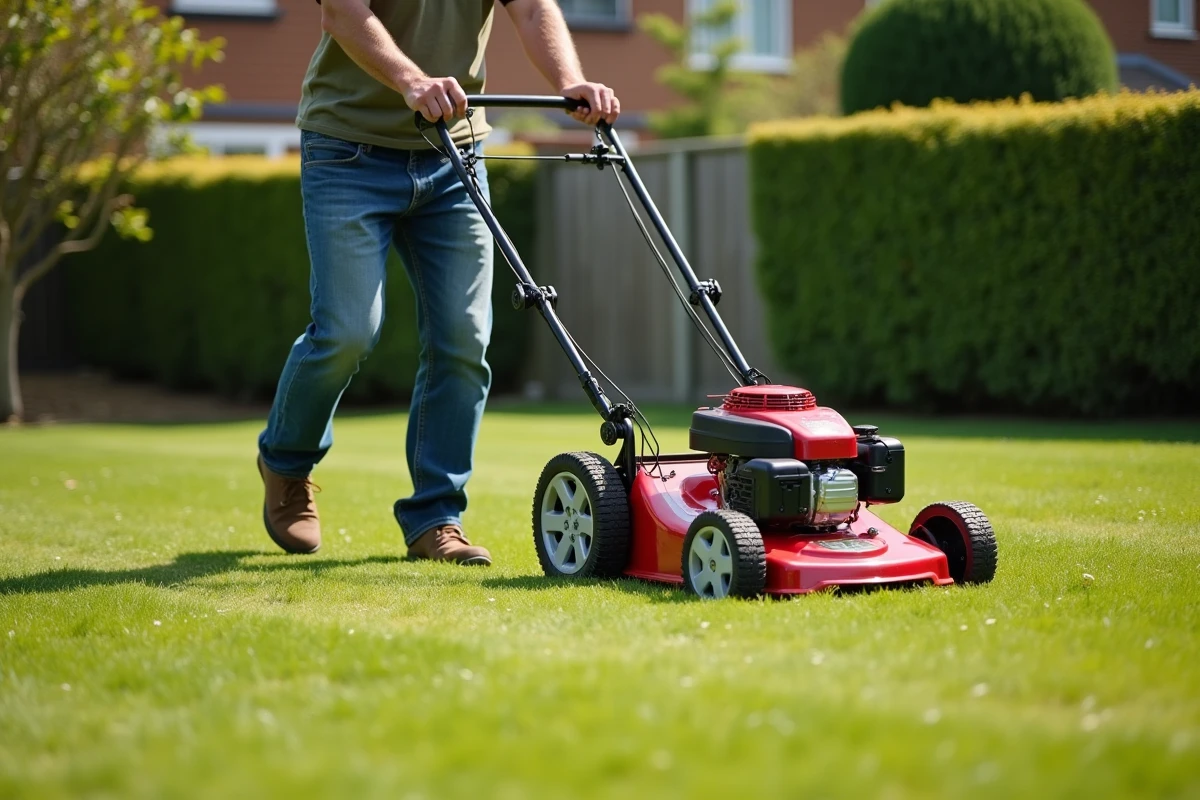
A 2500 m2 plot is the threshold where an undersized mower turns every mowing into a two-hour chore. The engine overheats, the passes multiply, and the cut loses its consistency. Conversely, a machine that is too powerful or too wide becomes difficult to maneuver around flower beds and trees. Finding the right balance between cutting width, engine power, and pushing comfort makes all the difference on this surface.
Fuel Compatibility: The Trap No One Checks Before Purchase
Have you ever had a mower engine that refuses to start after a few weeks of inactivity? On a 2500 m2 plot, mowing is done on average every ten to fifteen days. Between mowings, fuel stagnates in the tank and the carburetor.
Since 2023, most gas stations offer SP95-E10 as standard fuel. This blend contains a portion of ethanol which, on certain engines, causes carburetor gumming and swelling of seals. Briggs & Stratton, Honda, Stihl, and Husqvarna now specify in their manuals which engines can safely use E10.
Before purchasing, check this mention in the technical sheet. If the engine is not E10 compatible, you will need to use regular SP95 or an alkylate fuel (like Aspen), which is more expensive per liter. This additional cost, over several seasons, weighs on the overall budget. To properly choose a thermal mower for 2500 m2, this technical data should be verified even before comparing cutting widths.
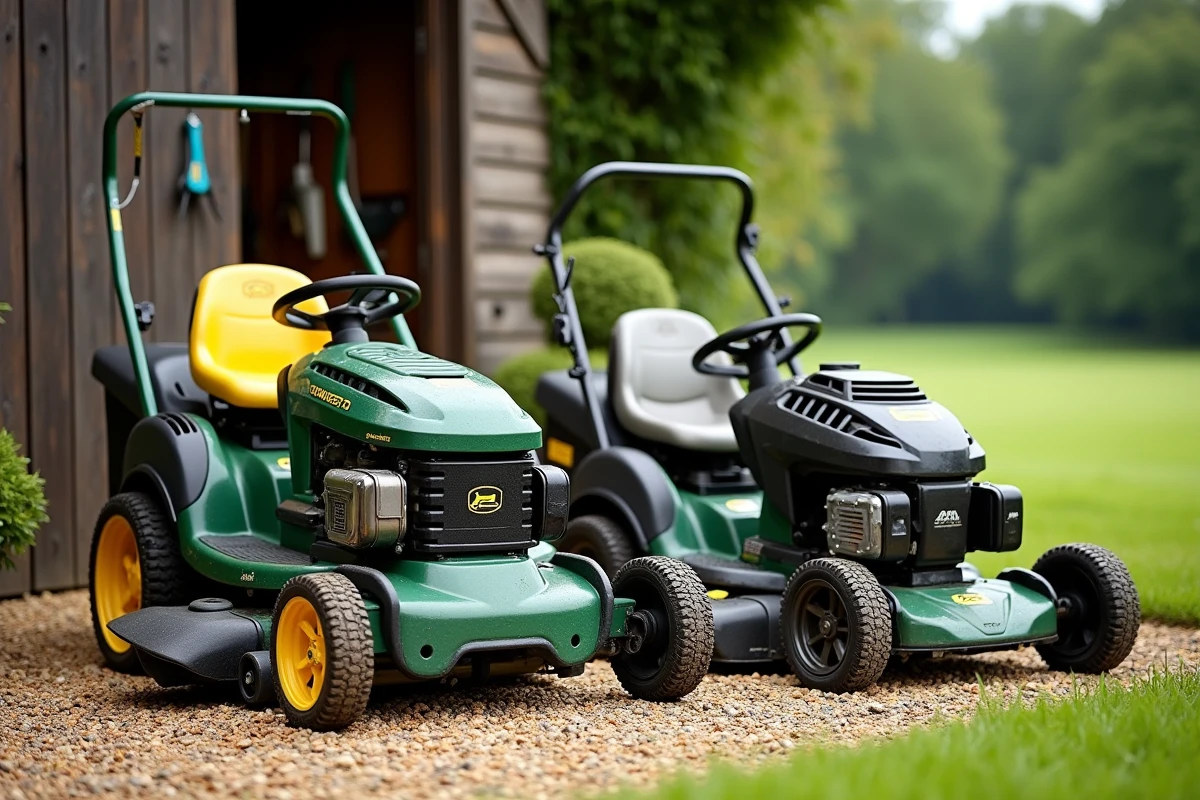
Cutting Width and Engine Power: The Duo That Determines Mowing Time
The cutting width is the strip of grass cut with each pass. The wider it is, the fewer back-and-forth movements you make. On 2500 m2, the difference between a 46 cm cut and a 53 cm cut represents several dozen fewer passes per mowing.
What Cutting Width for 2500 m2
A cutting width between 51 and 56 cm is suitable for a 2500 m2 plot. Below 50 cm, the number of passes significantly extends the mowing time. Beyond 56 cm, the machine becomes heavy and unwieldy in cluttered areas (around a vegetable garden, among fruit trees).
Power of the Thermal Engine
The engine must drive the blade without slowing down in tall or wet grass. For this area, manufacturers like Briggs & Stratton or Honda offer 4-stroke engines that provide enough torque to maintain a stable rotation speed, even when the grass is dense after two weeks without mowing.
An undersized engine struggles in dense areas. You can hear it losing speed, the cut becomes uneven, and the engine wears out faster. A properly sized engine maintains a constant speed without straining, regardless of the lawn’s condition.
Self-Propelled or Manual Push on a Large Plot
On a flat and clear surface, pushing a thermal mower is still feasible. On 2500 m2 with slopes, even slight ones, fatigue accumulates quickly. The question of traction (rear drive wheels) radically changes the experience.
A self-propelled mower reduces physical effort by at least half. The engine drives the rear wheels, and you simply guide the machine. This system adds a bit of weight, but the comfort gain more than compensates on a plot of this size.
Check that the forward speed is adjustable. Some models offer a single speed, while others allow you to adjust the pace according to grass density or slope. On a hilly terrain, this flexibility prevents you from running after the machine downhill or feeling it struggle uphill.
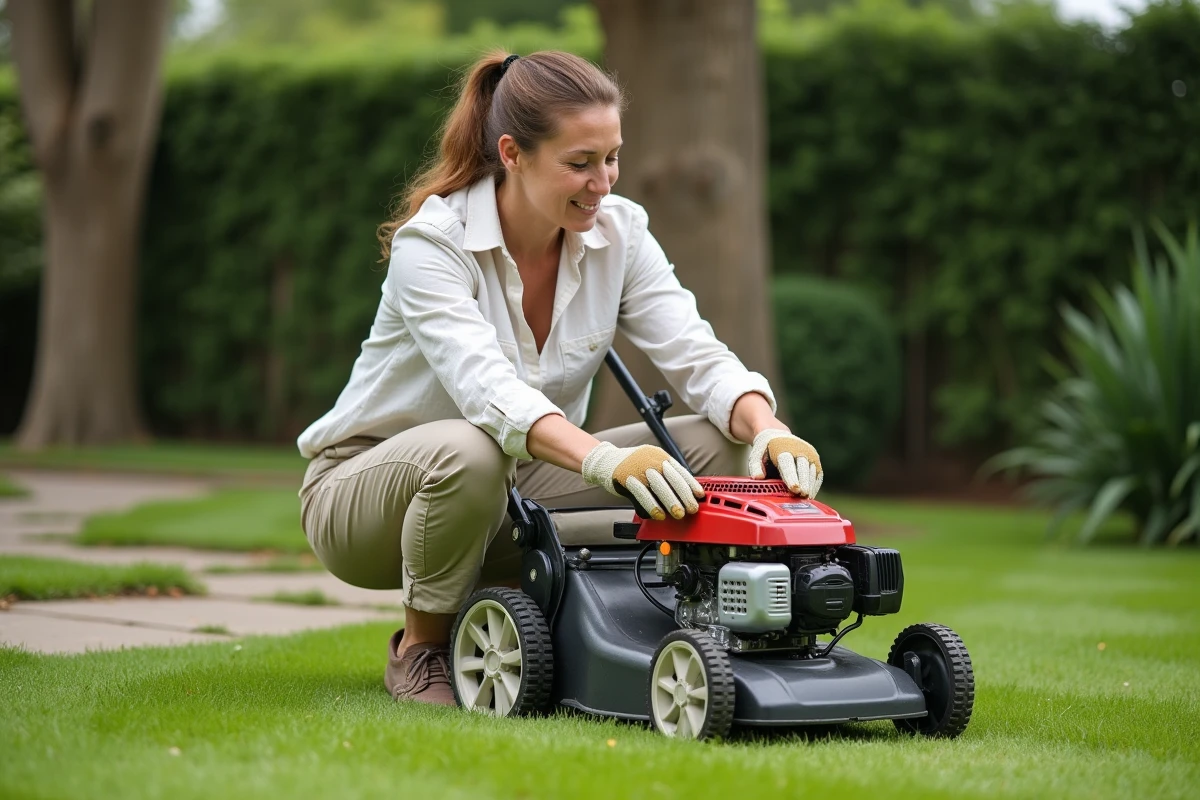
Mulching or Collection Bag: Which System for 2500 m2
Mulching involves finely shredding the cut grass blades and redistributing them on the lawn. The shredded grass decomposes and nourishes the soil. With a collection bag, you collect the mowing waste, but on 2500 m2, the bag fills several times per session.
- Mulching eliminates trips to the composter and naturally enriches the soil, provided you mow regularly (about every ten days) so that the residues are fine enough
- The collection bag remains useful if the lawn hasn’t been mowed for a long time or if the grass is very tall, as mulching doesn’t work well with overly long blades
- Many models offer a combined system: interchangeable mulching and collection bag, allowing you to adapt the mowing mode to the situation
On a 2500 m2 plot, mulching saves considerable time with each mowing. This is a comfort criterion that weighs more than in a small garden, because the volume of green waste to manage is proportionally higher.
Thinking in Terms of Usage Cost Over Several Seasons
The purchase price tells only part of the story. Professionals in the lawn care industry have observed a clear trend in recent years: to think in terms of usage cost over ten years rather than purchase price.
Why this reasoning? Because on a 2500 m2 plot, the mower works much harder than a model dedicated to a small garden. The engine accumulates hours, the blade wears out, and the filters need to be changed more frequently.
- A recognized brand engine (Honda, Briggs & Stratton, Husqvarna) has a network of spare parts and repairers. A generic engine may cost less to purchase but can become irreparable after a few seasons
- Sharpening or replacing the blade is an annual expense. Some models use standard blades that are easy to find, while others use proprietary formats that are more expensive
- Fuel compatibility (E10 or not) affects the cost per liter at each fill-up, multiplied by several dozen mowings per year
A model sold slightly more expensive at purchase but equipped with a reliable engine and E10 compatibility often ends up costing less over five to seven seasons than an entry-level machine replaced twice in the same period. The true cost of a mower is calculated by the mowing, not at the checkout.