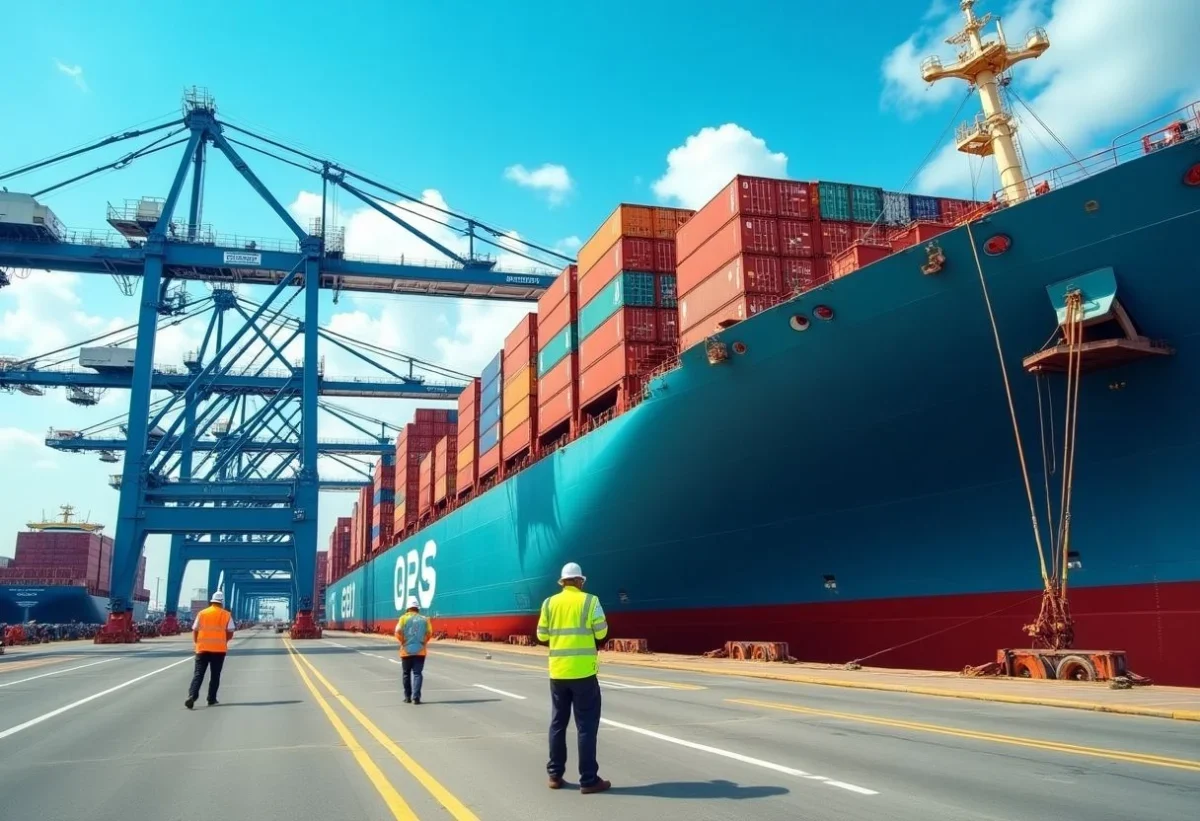
In an increasingly interconnected world, where physical borders blur in favor of global exchange, international transport stands out as an essential component of the global economy. It not only facilitates trade between countries but also plays a major role in the mobility of people and resources. Transport infrastructures and technologies are evolving to meet growing demand, allowing distant markets to connect and enriching our societies. Understanding the workings of this dynamic sector and the challenges it faces is crucial to grasping the functioning of our modern world.
The different modes of international transport
Different means of transport connect the continents, each having its specificities and distinct advantages.
- Maritime transport: Dominant in the transport of goods, it allows for the movement of large quantities of goods across oceans at a relatively low cost. Major ports like Rotterdam and Singapore are strategic hubs that orchestrate the relentless ballet of commercial ships.
- Aerial transport: Essential for high-value or perishable goods, air transport offers speed and security. International airports such as Charles de Gaulle and Dubai Airport are at the heart of this complex air network.
- Rail transport: Although limited by land infrastructures, it is crucial for transporting heavy goods across continents, particularly in Europe and Asia.
- Road transport: Complementary to other modes, it ensures the final distribution of goods to their destinations, connecting rural areas to major urban centers.
The challenges of international transport
In the face of the many opportunities offered by international transport, several challenges are also on the horizon.
One of the main issues is the environmental impact of transport. Carbon emissions from ships and planes significantly contribute to climate change. Optimizing routes, modernizing fleets with cleaner technologies, and developing alternative fuels are essential strategies to reduce this impact.
Another major challenge lies in logistics and supply chain management. Disruptions, whether due to economic, health, or geopolitical crises, put the resilience of logistics chains to the test. Technological innovation, through artificial intelligence and the Internet of Things, offers solutions to increase efficiency and transparency.
Technological innovations in international transport
Technology is a powerful driver transforming the international transport industry. Recent innovations promise to improve efficiency and reduce costs.
- Blockchain: By securing and simplifying transactions, it ensures transparency and reduces the risk of fraud in international operations.
- Automation and robotics: In ports and warehouses, these technologies accelerate the processing of goods and reduce human errors.
- Autonomous vehicles: Whether drones for parcel delivery or autonomous trucks, these innovations redefine last-mile logistics.
The impact of international transport on the economy
International transport is a powerful lever for the economic development of nations.
It enables job creation in the transport, logistics, and infrastructure sectors while facilitating access to global markets for local businesses. Moreover, by ensuring the flow of goods, it contributes to price stabilization and maintains the competitiveness of national economies.
The facilitation of cultural and human exchanges, by promoting tourism and immigration, is another positive impact often underestimated. The sharing of ideas, skills, and innovations is largely made possible by the interconnection of transport networks.