
When preparing for the arrival of a baby alone, without a second adult at home to help out, every detail of organization counts double. Maternity and the first days with a newborn require an energy that no one can truly anticipate, especially not a single parent who has to coordinate everything without a safety net. This article starts from concrete situations to establish useful benchmarks, including information on administrative assistance that many single parents never activate.
Single Parent and Baby’s Arrival: The Solo Organization That Changes Everything
A single parent cannot rely on nighttime help during the first weeks. The priority, even before the birth, is to build a support network that is identified and reachable: a neighbor, a family member, or occasional home help.
On the administrative side, several provisions remain underutilized. The family support allowance (ASF) provided by the CAF applies to parents raising a child alone. The PMI (Maternal and Child Protection) offers free home visits after birth, with nursing or midwife follow-up. One can also request temporary housekeeping help through the CAF or MSA, subject to income conditions.
To delve deeper into the steps related to birth and find additional resources, the website maman-bebe-conseils.fr to discover gathers practical sheets that are regularly updated.
Preparing meals in advance (batch cooking simple dishes, homemade frozen meals) prevents having to improvise dinner with a newborn in your arms. It’s a logistical detail, but it makes a difference when managing everything alone.
Crib, Bedding, and Newborn Safety at Home

The choice of crib directly depends on the layout of the home. Co-sleeping beds have gained popularity in recent years, especially because they facilitate nighttime breastfeeding without having to get up completely. For a solo parent, co-sleeping reduces fatigue related to back-and-forth trips between two rooms.
The sleeping rules remain the same regardless of the type of bed: baby on their back, firm mattress, no pillow, no blanket or bumper. The room temperature ideally stays between 18 and 20 degrees. A sleeping bag suitable for the season replaces the duvet.
One point on which feedback varies: some parents find the co-sleeping cradle cumbersome in a small room. If space is limited, a compact crib placed right next to the parental bed serves the same function, provided it can be easily accessed at night.
i-Size R129 Car Seat Standard: What Has Changed for Outings with Baby
As of January 2025, the i-Size R129 standard requires transporting infants rear-facing until at least 15 months in Europe. This is no longer a recommendation; it is a regulatory obligation.
In practical terms, this means that a second-hand group 0+ car seat must be checked: if it does not bear the R129 label, it is no longer compliant. Before buying or borrowing a seat, one should check the approval label attached to the shell.
- Check for the “R129” or “i-Size” label on the seat, never just the brand
- Install the seat rear-facing on the back seat, preferably on the curb side to load baby safely
- Never place a shell seat facing forward, even for a short trip, even if the child protests
- Ensure that the Isofix base (if used) is properly locked; an audible click confirms the lock
For a parent doing everything alone, installing a car seat for the first time can take time. It’s best to practice before the birth, in a calm setting, without pressure.
Maternity Bag and Baby Registry: Aim for the Useful, Not the Complete
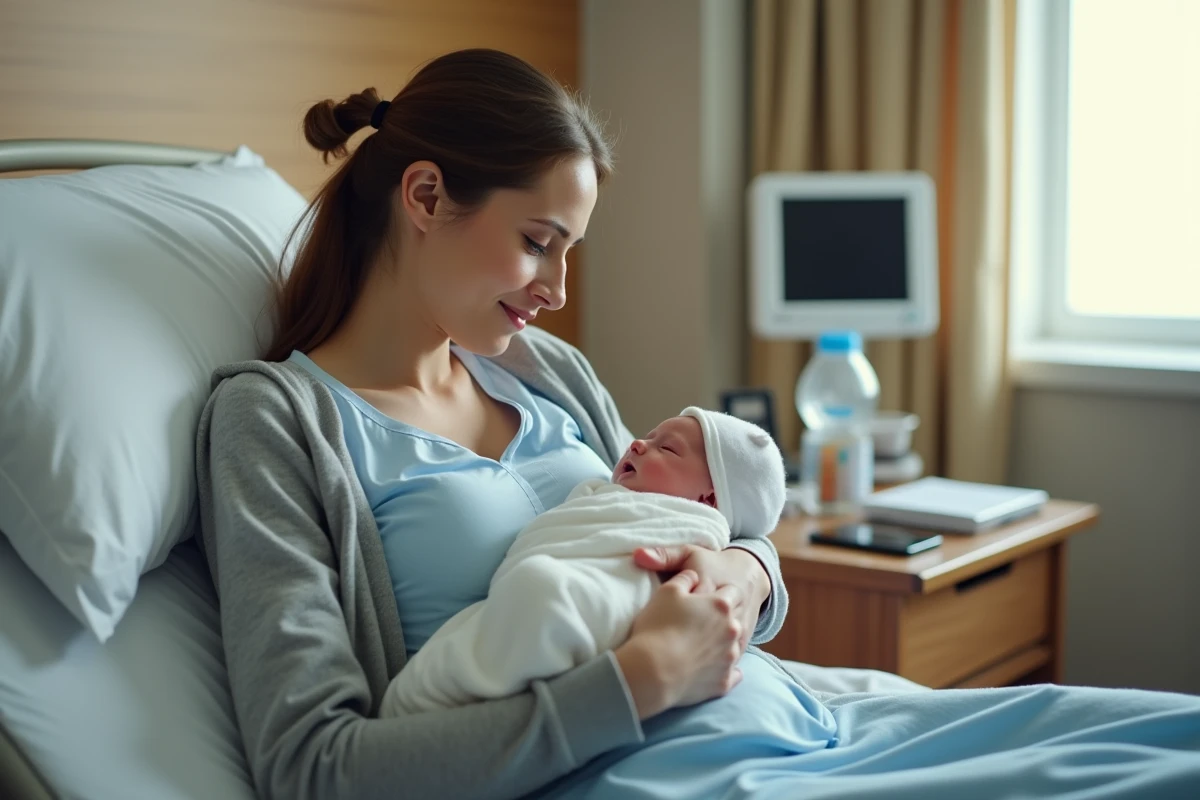
Most baby registries circulate with dozens of items. In practice, the essentials for the first days fit into about ten products. The rest can be purchased gradually, based on the real needs of the baby and the mother.
The maternity bag should ideally be prepared at the beginning of the eighth month. It contains two distinct categories: items for labor (administrative documents, comfortable outfit, misting spray, phone charger) and clothes for the newborn (bodysuits, pajamas, hat, size 1 diapers).
For bathing and changing products, keep it simple. A gentle soap is sufficient for the baby’s hygiene. Wipes are not recommended in the first weeks: cotton and warm water or liniment do the job without irritating the skin.
- Crossed bodysuits in newborn and 1-month sizes (the crossed design avoids pulling the garment over the head)
- Light sleeping bags for sleeping, one for each temperature range
- Diapers in small quantities at first, to test skin tolerance before buying in bulk
- Cotton cloth, usable for breastfeeding, burping, and surface protection
Breastfeeding and Postpartum Fatigue: Adjusting the Rhythm Upon Returning Home
The first weeks of breastfeeding require almost constant availability. Many mothers report fatigue setting in after the sixth week, a period when mixed feeding becomes a functional option to preserve energy.
Alternating breast and bottle feeding does not necessarily compromise breastfeeding if the initial setup went well. The midwife or lactation consultant can assist with this transition to avoid engorgement.
Rest is non-negotiable: sleep when the baby sleeps, even during the day. For a solo parent, this means accepting that housework can wait and that visits should be limited in the first days. Friends offering help are more useful with a cooked dish or folded laundry than with an additional baby gift.
Preparation for birth is not just about ticking boxes on a shopping list. It relies on concrete choices, adapted to one’s real situation. A well-supported parent, even without a partner, faces the first weeks with a baby in better conditions than an overwhelmed couple that has not anticipated anything.