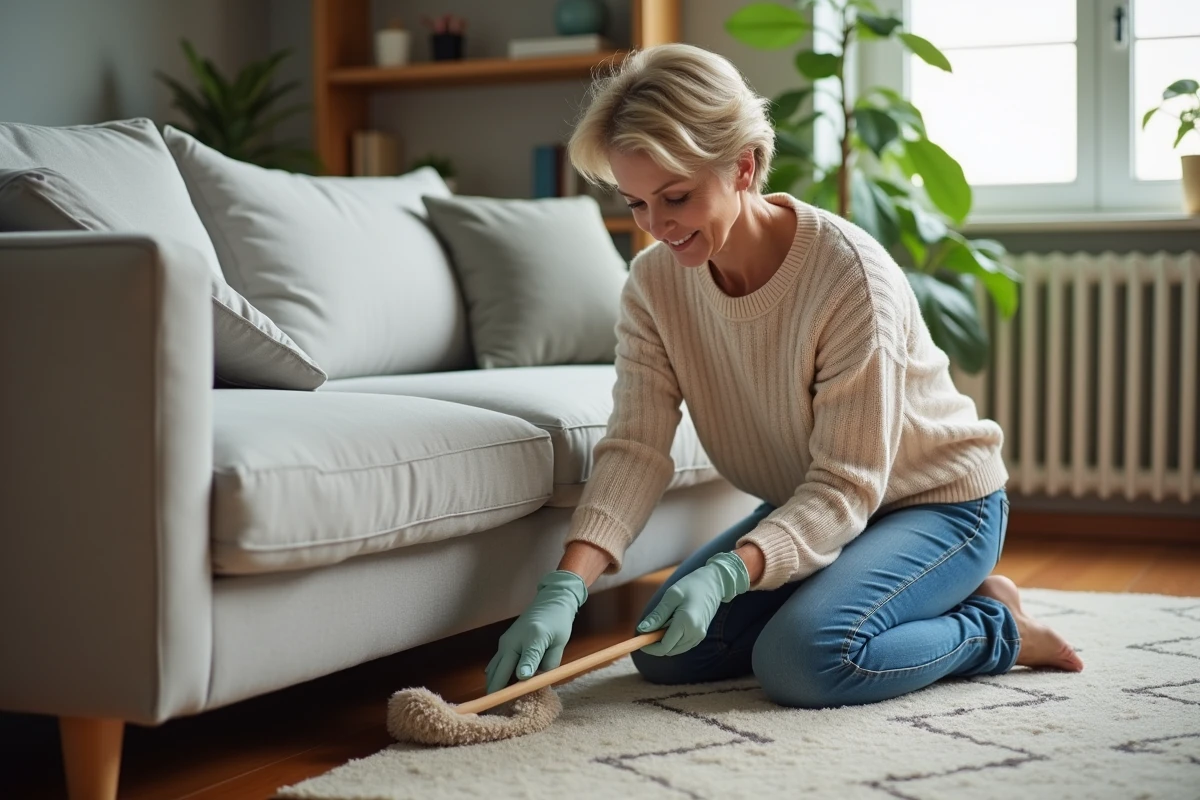
The inaccessible areas to a traditional broom concentrate up to five times more fine dust than visible surfaces. According to a study conducted by ADEME, 34% of dust mites present in a home nest under low furniture, thus escaping traditional cleaning routines.
Some widely used solutions, however, worsen the proliferation of particles under sofas and beds. Others, more specific, allow for an allergen reduction rate of over 80%. The effectiveness directly depends on the choice of tools and their adaptation to each interior configuration.
Why does dust accumulate under furniture and what risks does it pose to your home?
Dust does not limit itself to visible corners. Under furniture, it finds shelter, taking advantage of stagnant air, a space rarely disturbed, and gravity that attracts textile fibers, hair, lint, and fine particles. This area, out of sight, becomes a true reservoir of contaminants. Even a regular cleaning of accessible surfaces is not enough: dust slips under sofas, settles in, carried by daily movements or simply by drafts.
Entry mats limit the influx of dirt, but nothing stops dust in its quest for forgotten corners. Vacuum cleaner filters, on the other hand, filter effectively… as long as they are maintained and replaced regularly. A neglected filter releases into the air what it was supposed to retain. The condition of these elements directly influences the purity of the air indoors.
Ignoring these particles is not trivial: allergens, mold, and microorganisms thrive there. The most vulnerable, whether children or asthmatic individuals, suffer first from this neglect. An effective cleaning therefore requires tools capable of reaching tight corners, where dust accumulates mercilessly.
To meet this challenge, tools for a wet and dry vacuum cleaner stand out. These versatile solutions adapt to deep cleaning needs and help maintain a healthy environment. Find their detailed interest in the article: Cleaning under furniture: the tools that really make a difference.
Focus on clever tools to reach difficult-to-access areas
Some accessories change the game for dislodging dust under furniture. Well-chosen tools make accessible what seemed out of reach. The microfiber broom has established itself: its flexible head conforms to contours, glides under sofas, and catches hair and lint in one pass. Nothing escapes it.
The long-handled duster, for its part, seeks dust in the depths and heights while being gentle on the back. On hard floors, the broom gathers dirt around furniture legs, while the microfiber cloth takes care of delicate surfaces without scratching or leaving marks.
To move furniture without straining or risking scratches, sliding pads prove invaluable. They allow easy access under buffets or cabinets. The flexible vacuum cleaner completes the equipment: with fine nozzles and an articulated tube, it slips under beds and into forgotten corners. Finally, the robot vacuum autonomously patrols under furniture, methodical and persistent, even where the hand cannot reach.
Here are the main tools to consider for cleaning under furniture based on your interior constraints:
- Microfiber broom: for floors and corners
- Long-handled duster: for inaccessible dust
- Sliding pads: for effortless moving
- Flexible vacuum cleaner: for angles and under furniture
- Robot vacuum: to automate cleaning under furniture
The thoughtful arrangement of these accessories optimizes cleaning, maintains air quality, and preserves a healthy interior, regardless of room configuration.
Practical tips for effective and lasting cleaning under your upholstered furniture
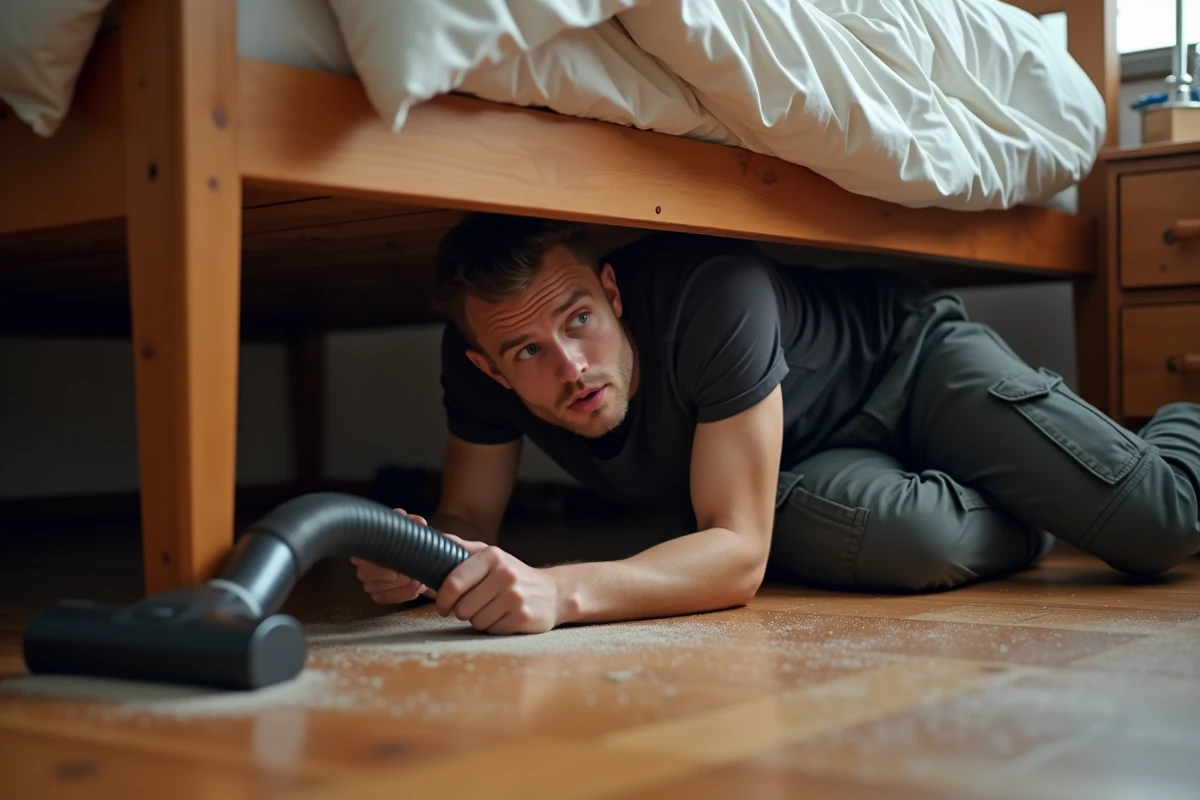
To effectively maintain upholstered furniture, it is better to establish a methodical routine. First, clear the space: move light objects aside, place sliding pads under the feet to facilitate movement without damaging the floor. Vacuum with a flat nozzle under the structure to extract accumulated dust and hair. A microfiber cloth can be used to gently wipe feet and edges.
When a deep cleaning is necessary, take out a well-wrung mop and a wringer bucket: the goal is to dampen without soaking. Mix black soap with warm water to clean without harming surrounding textiles. In case of stains or to deodorize, white vinegar and baking soda prove effective while remaining environmentally friendly. Don’t hesitate to wear household gloves: your skin will appreciate it.
To increase efficiency, it is wise to gather the following items within reach:
- Disinfecting wipes for quick disinfection
- Spray bottle for applying cleaning solutions
- Trash bags for disposing of dust and debris
Remember to regularly replace sponges, vacuum filters, and mops. Investing in professional cleaning equipment limits frequent replacements and ensures a tidy interior without unpleasant surprises.
Ultimately, it is often in the most overlooked areas that the health of the home is at stake. Armed with the right tools, every corner becomes accessible again. And if true luxury is breathing pure air without ever wondering what lies beneath the sofa?