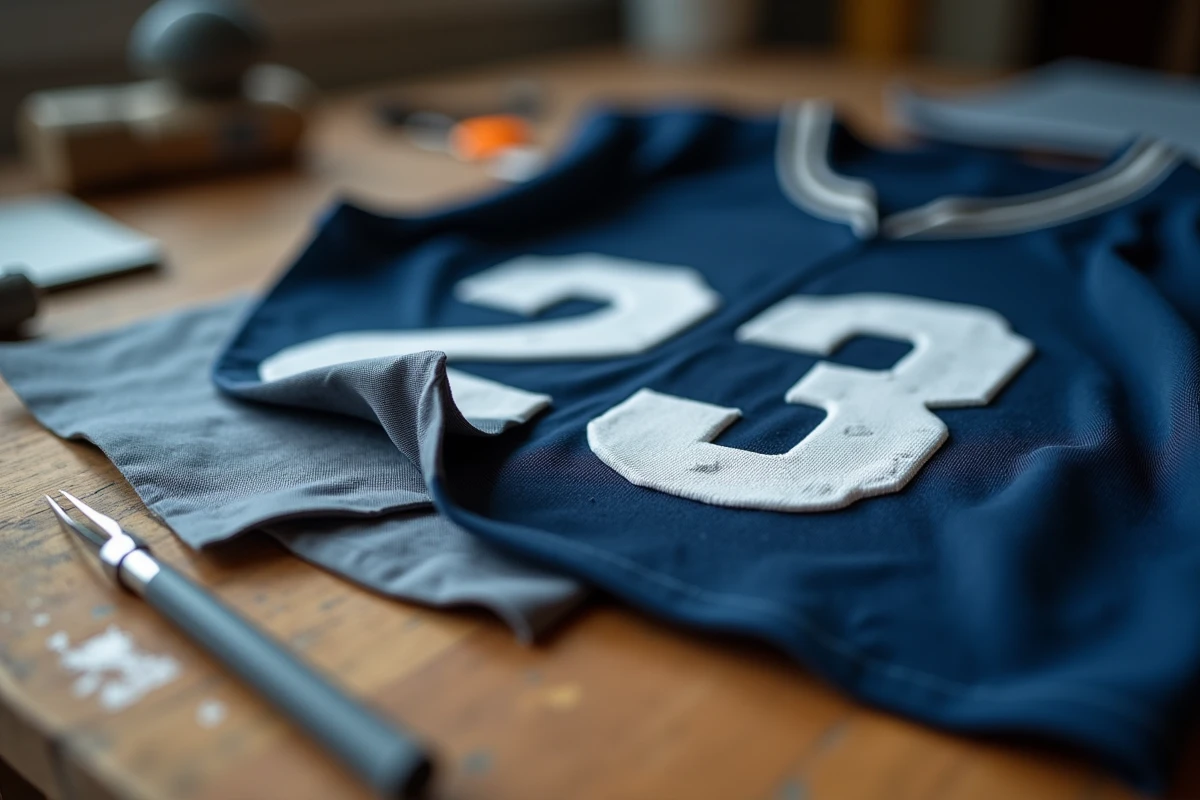
A heat transfer flocking can yield perfect results on one batch of t-shirts and peel off after the first wash on another batch, even though treated with the same settings of temperature, pressure, and duration. This disparity is not coincidental: it is due to variables that are rarely documented by vinyl or textile suppliers. Understanding these variables helps avoid wasting materials, time, and clothing.
Vinyl-textile compatibility: the factor that technical sheets do not cover
The technical sheet of a flocking vinyl generally indicates a temperature (around 150-165 °C), a pressure (medium to high), and a duration (about ten seconds). These parameters assume a “standard” textile, often a combed cotton without surface treatment.
The problem arises as soon as the textile deviates from this base. Low-cost promotional t-shirts often receive invisible industrial finishes: bleaching agents, softeners, anti-wrinkle treatments. These chemical layers form a barrier between the vinyl adhesive and the fiber. The vinyl then adheres to the finish, not the fabric, and the first wash cycle takes it all away.
Synthetic fibers pose another type of difficulty. Polyester, very common in sportswear, reacts poorly to high temperatures. Applying vinyl designed for cotton on a 100% polyester jersey can cause localized shrinkage of the fabric or softening of the fiber, which weakens the bond. To delve deeper into solutions for peeling flocking, one must first admit that each vinyl-textile combination is a unique case.
| Variable | Raw cotton textile | Cotton textile with finish | Polyester |
|---|---|---|---|
| Initial adhesion | Strong | Medium to weak | Variable depending on temperature |
| Washing risk | Low | High from the first cycle | Medium (mechanical sensitivity) |
| Recommended pre-treatment | None | Pre-wash or pre-pressing | Dedicated low-temperature vinyl |
| Main cause of peeling | Insufficient pressure | Chemical surface barrier | Thermal deformation of the fiber |
Compatibility tests before mass production
A small workshop or an individual launching a series of flocking on a new batch of textiles takes a risk every time they skip the testing step. The logic is simple: a test on a fabric scrap costs a square of vinyl, a failure in series costs the entire batch.
Quick testing protocol for a workshop
- Cut a sample of the intended vinyl and apply it to a scrap of the exact textile (not a similar fabric, the same roll or the same supplier) with the usual settings of the press or iron.
- Allow to cool completely, then attempt a manual peel at a 45-degree angle on one edge. If the vinyl lifts without resistance, the adhesion is insufficient.
- Wash the sample under the conditions that the finished garment will undergo (washing temperature, type of detergent, drying). Examine the edges and corners after complete drying.
- In case of partial peeling, conduct a second test after a pre-pressing of the textile alone for a few seconds, which removes residual moisture and part of the surface finishes.
This protocol takes less than an hour and helps identify a compatibility issue before committing stock. Workshops that systematically practice it report significantly fewer customer returns related to peeling.
Pre-pressing and pre-washing: two approaches to neutralize finishes
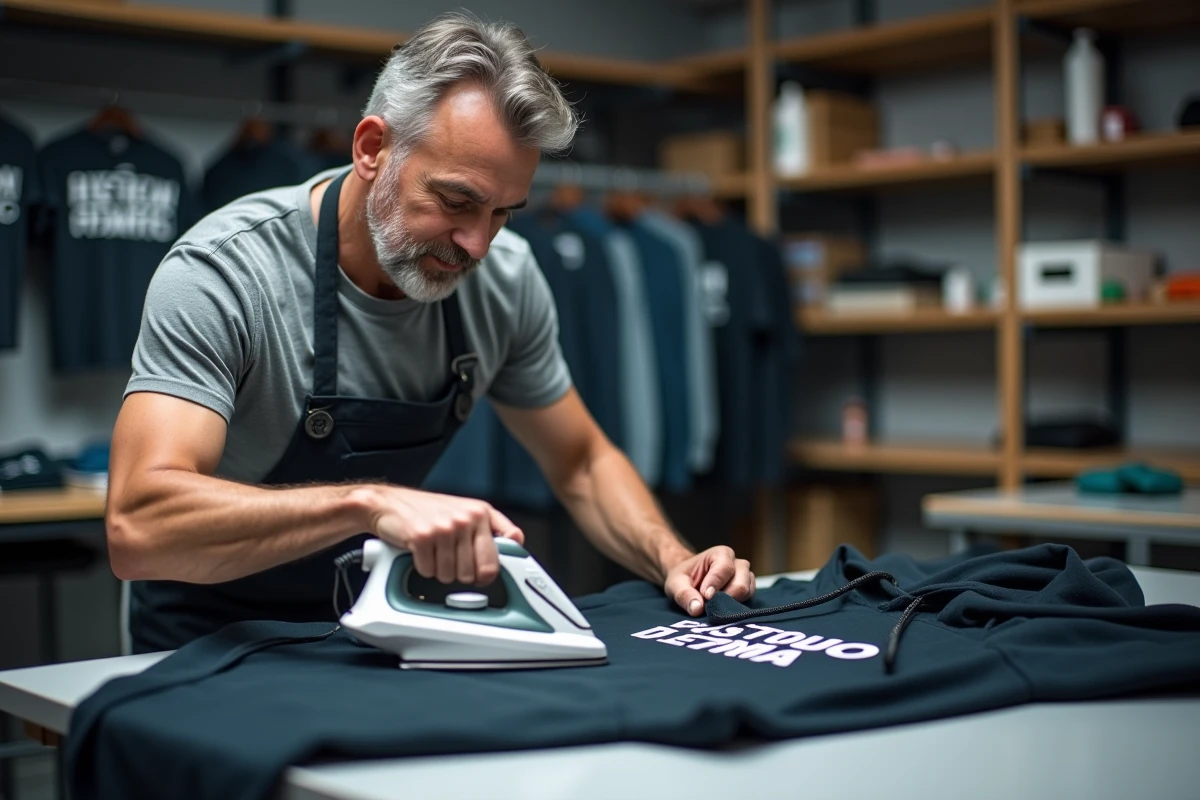
Pre-pressing involves passing the textile under the heat press (or iron) without vinyl for a few seconds. This operation serves two functions: it expels moisture trapped in the fibers and partially degrades the chemical surface finishes. On entry-level promotional t-shirts, pre-pressing significantly improves adhesion.
Pre-washing goes further. Washing the textile in a machine before flocking removes the majority of industrial finishing agents. However, it requires complete drying and possible ironing, which extends production time.
For a small workshop, pre-pressing represents the best compromise: it integrates into the workflow without an additional washing-drying step. Pre-washing is particularly justified when the compatibility test has revealed peeling despite pre-pressing.
Flocking or hybrid marking: choosing the technique based on the area
Some specialized printers recommend not to flock everything. In areas that are mechanically stressed (back of jerseys, large flat surfaces subjected to friction), techniques like DTF (Direct to Film) or low-temperature plastisol screen printing offer better resistance to repeated mechanical stresses.
Flocking retains its advantage for small customizations: names, numbers, modest-sized logos. On these smaller surfaces, peeling forces are lower, and the heat transfer vinyl holds up well, provided that the textile-vinyl compatibility has been verified.
This hybrid approach, which reserves each technique for the area where it performs best, reduces complaints without imposing a complete change in marking method.
When washing accelerates peeling
Even a well-applied flocking can weaken if the washing of the flocked garment ignores certain precautions. Hot water softens the hot melt adhesive. Aggressive detergents attack the binder. The dryer subjects the vinyl to prolonged heat and mechanical friction in the drum.
- Turning the garment inside out before putting it in the machine protects the flocked surface from direct contact with the drum.
- A low-temperature cycle (30 °C or cold wash) preserves the adhesive without compromising the cleanliness of the fabric.
- Air drying, with the garment inside out, avoids continuous thermal exposure from the dryer.
These actions do not rectify a poorly applied flocking from the start, but they significantly extend the lifespan of a properly applied marking on compatible textiles.
Peeled flocking rarely results from a single cause. The textile-vinyl combination, surface finishes, actual pressure applied, and washing conditions interact. A compatibility test before each new batch of textiles remains the most effective measure for a workshop that wants to limit rework and material loss.