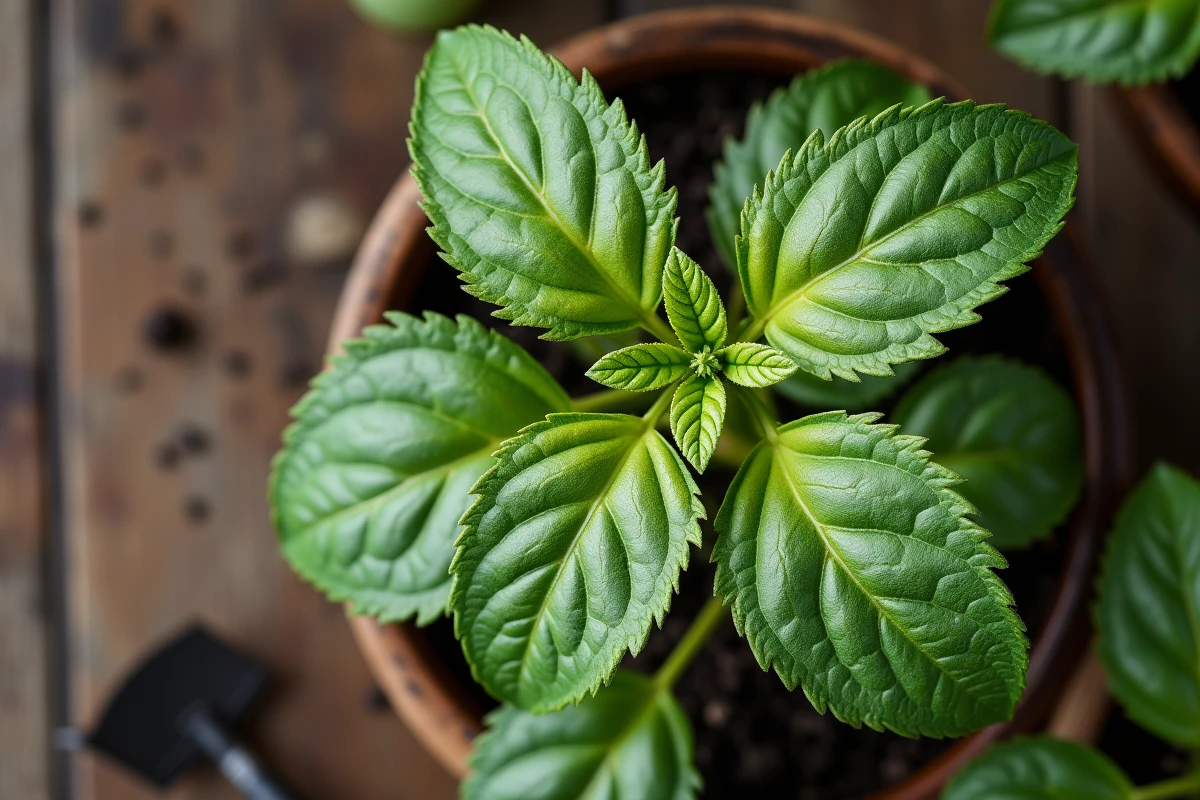
A yellowing tomato leaf does not necessarily indicate a nitrogen deficiency. Before correcting a presumed deficiency, we must first rule out non-nutritional causes that produce visually identical symptoms. Knowing how to read the symptom’s position on the plant remains the first reliable diagnostic reflex.
True deficiency or induced deficiency: the diagnosis that guides omit
A generalized yellowing after a cold rain episode or excessive watering perfectly mimics nitrogen chlorosis. The difference lies in the dynamics of appearance. A nutritional deficiency sets in gradually, over several days, following a precise gradient (from the lower leaves to the top, or vice versa depending on the element). Root stress, on the other hand, causes diffuse and simultaneous yellowing across the entire foliage.
We recommend checking three points before any fertilization correction:
- The condition of the roots: brown or soft roots indicate asphyxiation due to excess water, not a mineral deficit. Cut away the necrotic portions and allow the substrate to dry on the surface before watering again.
- The soil temperature: below about twelve degrees, phosphorus absorption drops significantly. The leaflets then take on a purplish hue that disappears as soon as the soil warms up, without any fertilizer application.
- The pH of the substrate: a soil that is too calcareous blocks iron and manganese, causing interveinal chlorosis on young leaves. Correcting the pH is more effective than adding iron via foliar spraying.
To reliably identify tomato deficiencies, we always observe the location of the symptom on the plant before looking at the color itself.

Chlorosis of lower leaves: nitrogen, potassium, or magnesium
Mobile elements in the plant (nitrogen, potassium, magnesium, phosphorus) redistribute to the growing organs when root supply weakens. Symptoms therefore first appear on the oldest leaves, at the bottom of the plant.
Nitrogen: uniform yellowing without vein pattern
The leaf transitions from pale green to yellow uniformly, without the veins remaining green. In the case of prolonged deficiency, the leaflets necrose and fall off. Vegetative growth slows significantly, and the internodes remain short.
Magnesium: green veins on a yellow background
Interveinal yellowing on older leaves is the signature of magnesium. The main veins retain their green color while the tissues between them turn yellow, then brown at the end of the process. Fruits may exhibit a persistent green collar. Do not confuse this with iron chlorosis, which affects young leaves.
Potassium: marginal yellowing then brown necrosis
Potassium deficiency manifests as leaf edges that yellow then brown before necrosing. The blade curves downward. The lower part of the stem may take on a purplish hue. Fruits become soft, hollow, irregularly sized, and poorly colored.
Symptoms on young leaves: iron, calcium, and boron
Less mobile elements do not migrate to new shoots. Their deficiency is evident at the top of the plant, on the forming leaflets.
Iron chlorosis affects young leaflets first. The blade yellows between the veins, which remain a bright green, creating a sharp contrast. This pattern resembles that of magnesium, but the location on the plant is opposite: top for iron, base for magnesium.
Calcium deficiency manifests differently. Young leaves may remain green at first, then become abnormally pale or distorted, with irregular edges. On fruits, it is the apical necrosis (blossom end rot) that reveals the deficit, often linked to irregular watering rather than a real lack of calcium in the soil.
Boron, when deficient, causes deformities and thickening of young leaflets, sometimes accompanied by necrosis at the terminal growth point.
Phosphorus and molybdenum: atypical colorations not to be ignored
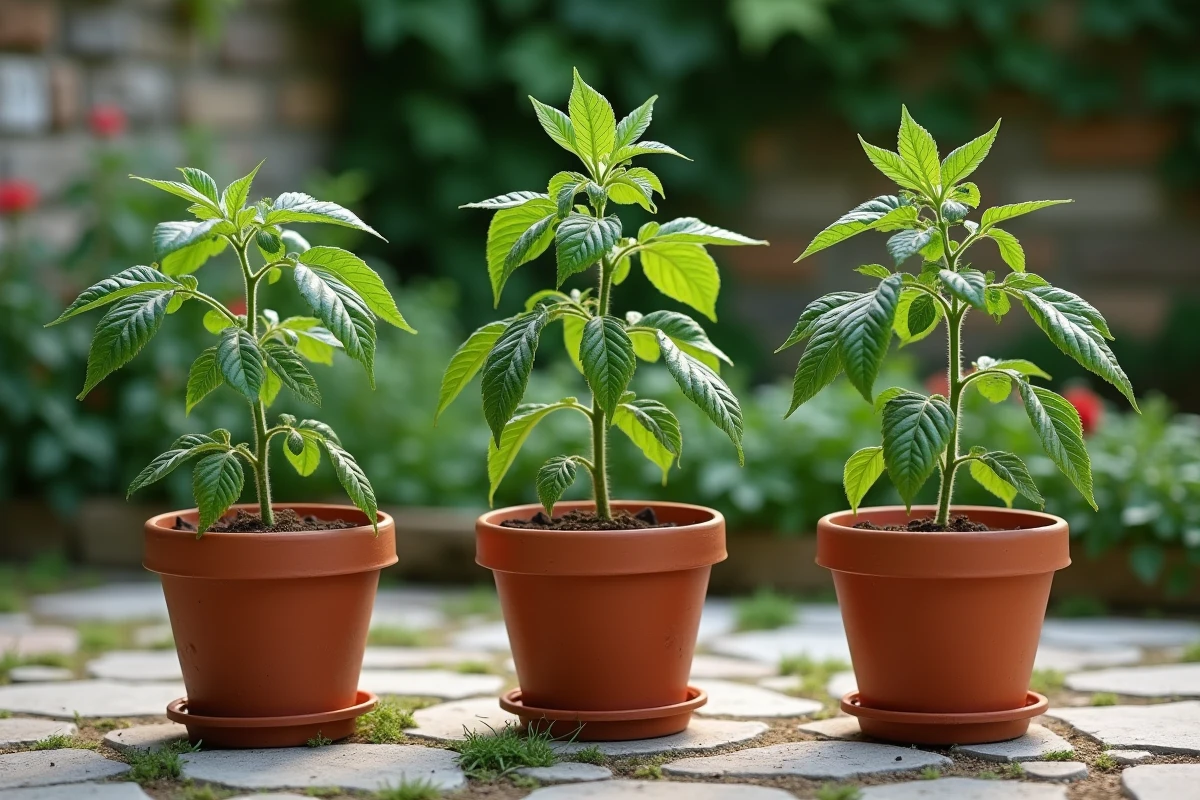
Not all deficiencies manifest as yellowing. A dark foliage with a purplish hue on the underside indicates a phosphorus deficiency. The veins take on this characteristic purple coloration, the stem remains thin, and the fruits are hollow and poorly colored. Early in the season, this symptom is common due to the still cold soil and corrects itself naturally with warming.
Molybdenum, a rarely mentioned trace element, causes marginal chlorosis on intermediate leaves, sometimes confused with potassium deficiency. The distinction lies in the fact that molybdenum affects nitrogen metabolism, and the plant simultaneously shows signs of nitrogen deficiency despite sufficient nitrogen supply.
Summary table: color, position, and element
| Element | Position on the plant | Dominant color | Pattern |
|---|---|---|---|
| Nitrogen | Lower leaves | Uniform yellow | Homogeneous, no vein pattern |
| Magnesium | Lower leaves | Interveinal yellow | Green veins retained |
| Potassium | Lower leaves | Marginal yellow then brown | Necrotic edges, curved blade |
| Iron | Young leaves | Interveinal yellow | Green veins, sharp contrast |
| Calcium | Young leaves | Diffuse paleness | Deformation of edges |
| Phosphorus | Lower leaves | Dark green, purple underneath | Purple veins |
The visual diagnosis of deficiencies on tomatoes relies on two axes: the position of the symptom (old or young leaves) and the color pattern (uniform, interveinal, marginal, purple). Cross-referencing these two criteria before fertilizing avoids unnecessary corrections, and especially overdoses that worsen absorption blockages in the soil.