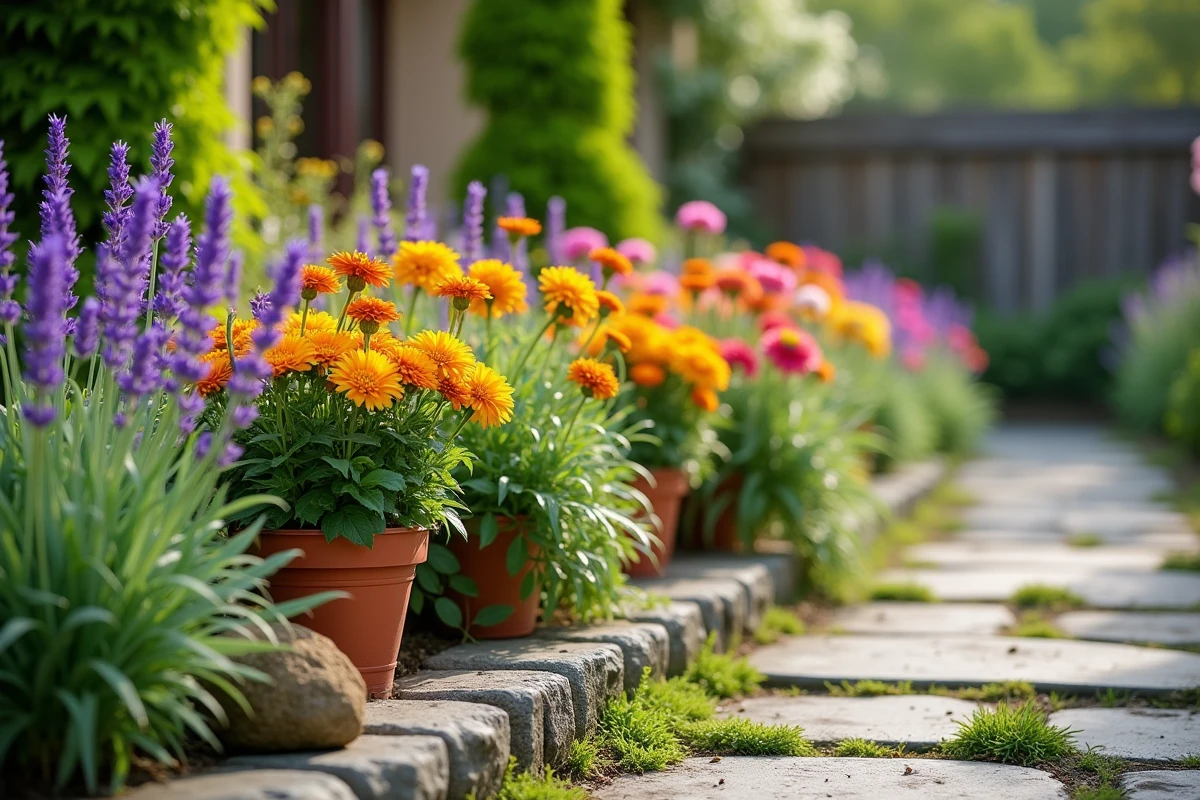
A mass of roses in June, perennial geraniums in July, then nothing from October onwards: this scenario repeats every year in most gardens. The problem does not lie in the choice of flowers, but in their timing in the calendar. Planting for a colorful garden all year round means covering the months that no one plans for, particularly the period from November to February, when the flower beds remain bare.
Early winter bulbs: filling the gap from November to February
The majority of gardening guides focus their recommendations on spring and summer. The cold months are treated as an afterthought. Yet this is where the difference lies between a garden that is colorful all year round and one that sleeps for four months out of twelve.
Crocuses and daffodils planted in autumn bloom as early as January in regions with mild winters, and in February elsewhere. The crocus tommasinianus, for example, breaks through the frozen ground before winter ends. Early daffodils (varieties like “Tête-à-tête” or “February Gold”) take over and ensure the transition to March.
For this relay to work, you need to think in layers. Plant daffodil bulbs about fifteen centimeters deep, then crocuses just above, around five centimeters. This layered planting technique allows two blooms to succeed each other in the same area without the bulbs interfering. You can explore other combinations on the Conseil au Jardin website to deepen your seasonal combinations.
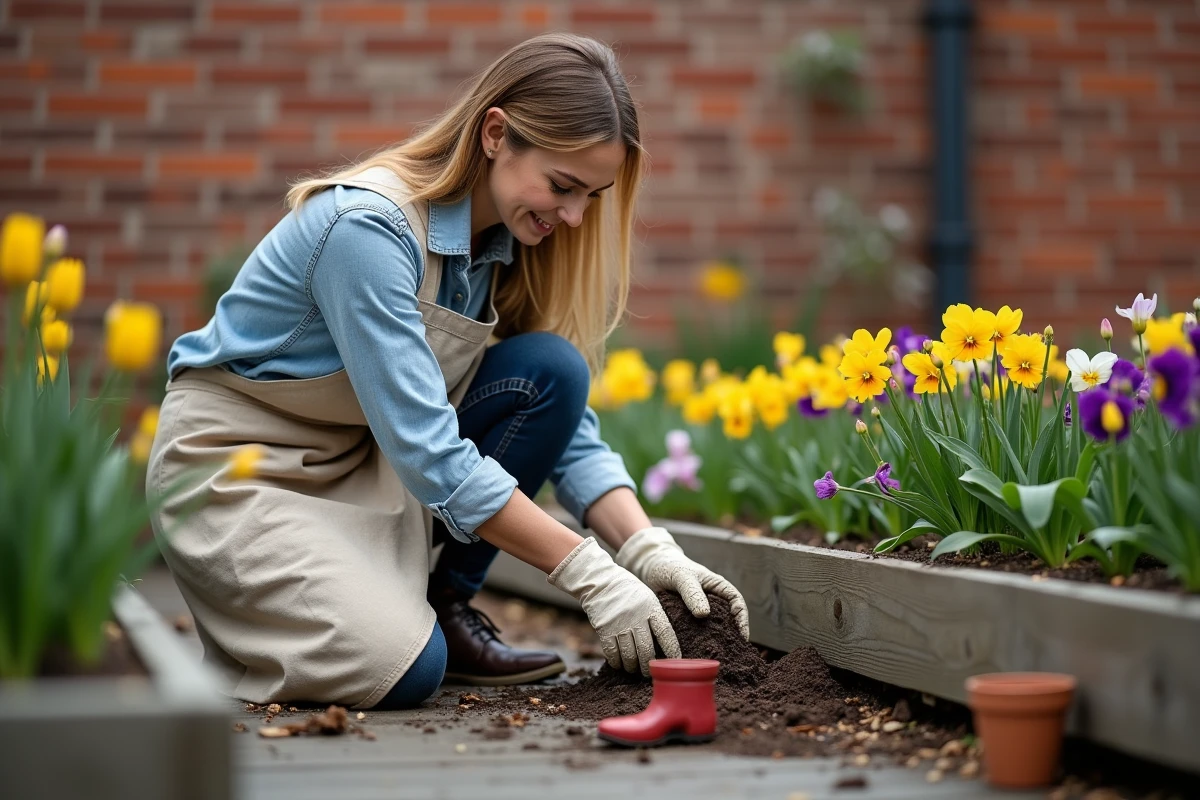
Add snowdrops at the edge of the bed. Their blooming sometimes starts as early as December. Three different bulbs are enough to cover from November to March, provided they are planted in September or October, when the soil is still warm.
Long-flowering perennials for spring, summer, and autumn
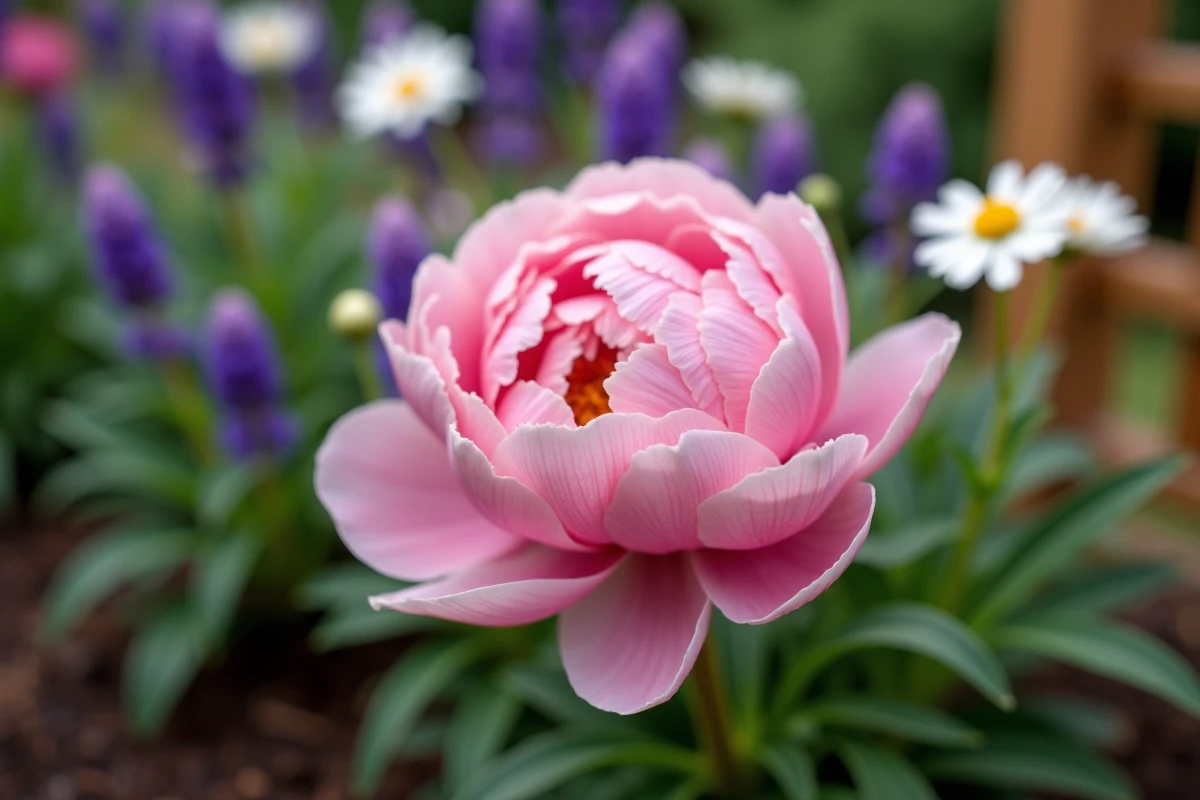
Once winter’s exit is ensured by the bulbs, the perennials take over. Their main advantage over annuals: they return every year and require less soil work.
From spring to summer
Perennial geraniums (notably Geranium “Rozanne”) bloom from May until the first frosts. Their flowering spans five to six months, making them a staple for any flower bed. They tolerate full sun as well as partial shade and adapt to most garden soils.
Gaura, with its flexible stems and white or pink flowers, brings lightness from June to October. It thrives in well-drained soil and withstands dry summers without excessive watering.
From summer to autumn
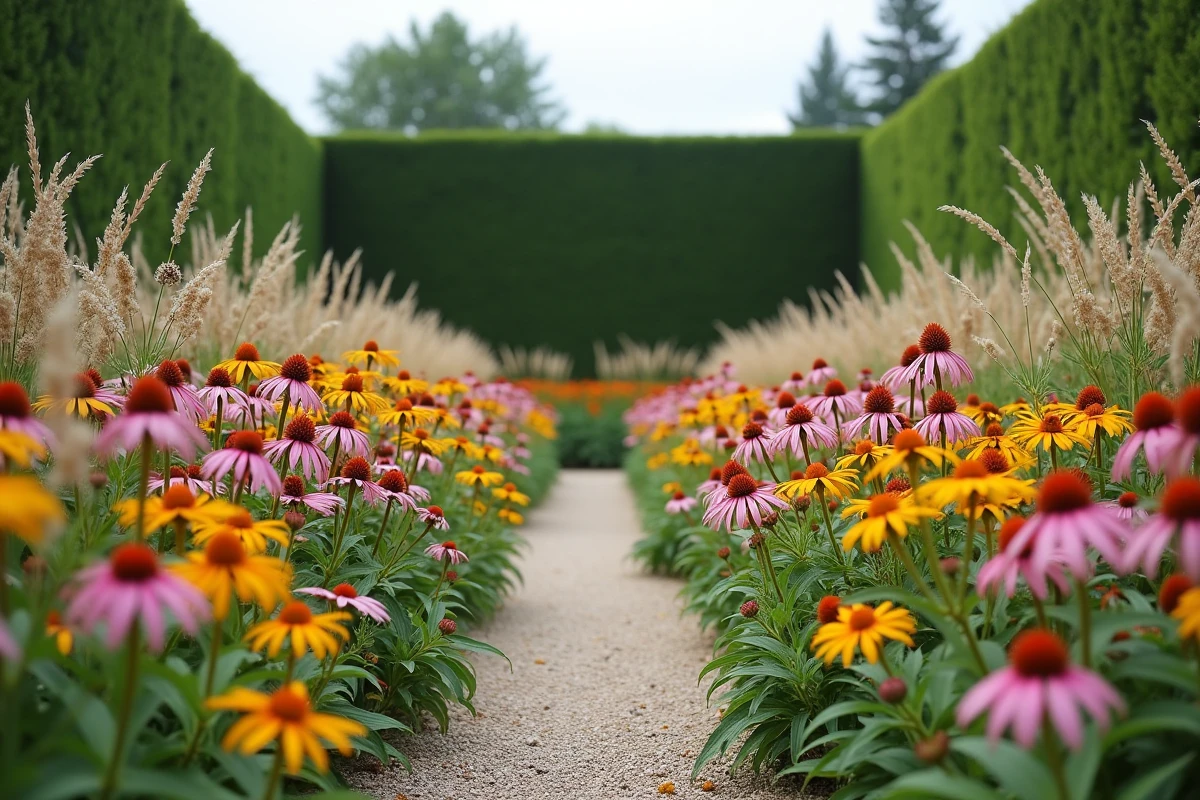
Echinaceas (Echinacea purpurea) cover the period from July to September. Their daisy-shaped flowers attract pollinators and do well in ordinary soil. Rudbeckias extend the color until the frosts, with yellow-orange tones that warm up late-season flower beds.
Autumn asters close the loop. They bloom from September to November and come in blue, purple, pink, or white. By pairing them with the last rudbeckias, you keep color in the garden until the winter bulbs take over.
Perennials or annuals in poor soil: a choice that changes maintenance
Are you gardening in chalky, stony, or sandy soil? The question of plant types arises differently. Annuals like zinnias or cosmos produce spectacular blooms, but they quickly deplete the available nutrients. In unamended soil, their vigor declines from the second year if you try to reseed them without any input.
Perennials like gaura and yarrow show superior resilience in unamended soils, with natural expansion observed in Mediterranean climate gardens without fertilization. Yarrow, in particular, gradually spreads and covers the ground, limiting weeding.
- Yarrow tolerates drought and blooms from June to September in yellow, pink, or white, depending on the varieties.
- Gaura requires little water and self-seeds spontaneously if the soil is well-drained.
- Lavender completes the trio: it structures the bed, scents the garden, and blooms from June to August in full sun.
This trio of perennials functions almost entirely autonomously after the first year of establishment. Regular watering in the first few weeks is enough to establish them.
Planning the succession of blooms month by month
Having the right plants is not enough if they all bloom at the same time. The real work lies in staggering the blooms so that at least two species are in flower each month.
Here is an example of a realistic calendar for a modest-sized flower bed:
- November to February: snowdrops, crocuses, early daffodils.
- March to May: late daffodils, primroses, perennial geraniums (beginning).
- June to August: gaura, yarrow, lavender, echinacea (from July).
- September to November: rudbeckias, autumn asters, then the return of the first autumn crocuses (Crocus speciosus).
This calendar is based on just ten varieties. There’s no need to turn the garden into a botanical collection. The key is to choose flowers whose blooming periods slightly overlap rather than multiplying species.
For beds exposed to partial shade, replace lavender with hostas (decorative foliage from spring to autumn) and echinaceas with astilbes, which bloom in summer without direct sunlight.
A garden in bloom all year round does not require more work than a traditional garden. It requires better distribution. Plant your winter bulbs in October, install your perennials in spring, and let the blooms succeed each other without intervention. The only regular task remains removing faded flowers to prolong production, and mulching in autumn to protect the bulbs from late frost.