
In France, renovation and DIY are playing an increasingly important role in homeowners’ and renters’ projects. Between the desire to keep costs under control and the urge to personalise their interiors, many people take on home improvement work without always knowing where the line lies between what they can do themselves and what requires a qualified professional. Successful DIY and home improvement projects start with an honest assessment of your skills, followed by careful planning at every stage.
DIY or professional help: where to draw the line
Before picking up a tool, the first question to answer is what kind of work the project involves. Painting, laying floating flooring, assembling furniture and replacing a tap require only basic tools and careful attention to the instructions. The most common mistake is underestimating work that affects safety.
Electrical work, gas installations and a home’s load-bearing structure are all regulated areas.
A poorly installed gas system can expose you to the risk of carbon monoxide poisoning or an explosion. Any work on a load-bearing wall (creating an opening or partially demolishing it) requires advice from a structural engineering firm and, in most cases, a prior works declaration to the local town hall.
Online resources such as bricoletout.fr can help you identify which jobs you can tackle yourself and which require a certified tradesperson, with details on the steps, tools and precautions involved in each type of project.
A simple test can help you decide: if the work could cause irreversible damage (a short circuit, gas leak or sagging floor), leave it to a professional. If the worst-case scenario is a disappointing but fixable finish, a motivated beginner can give it a go.
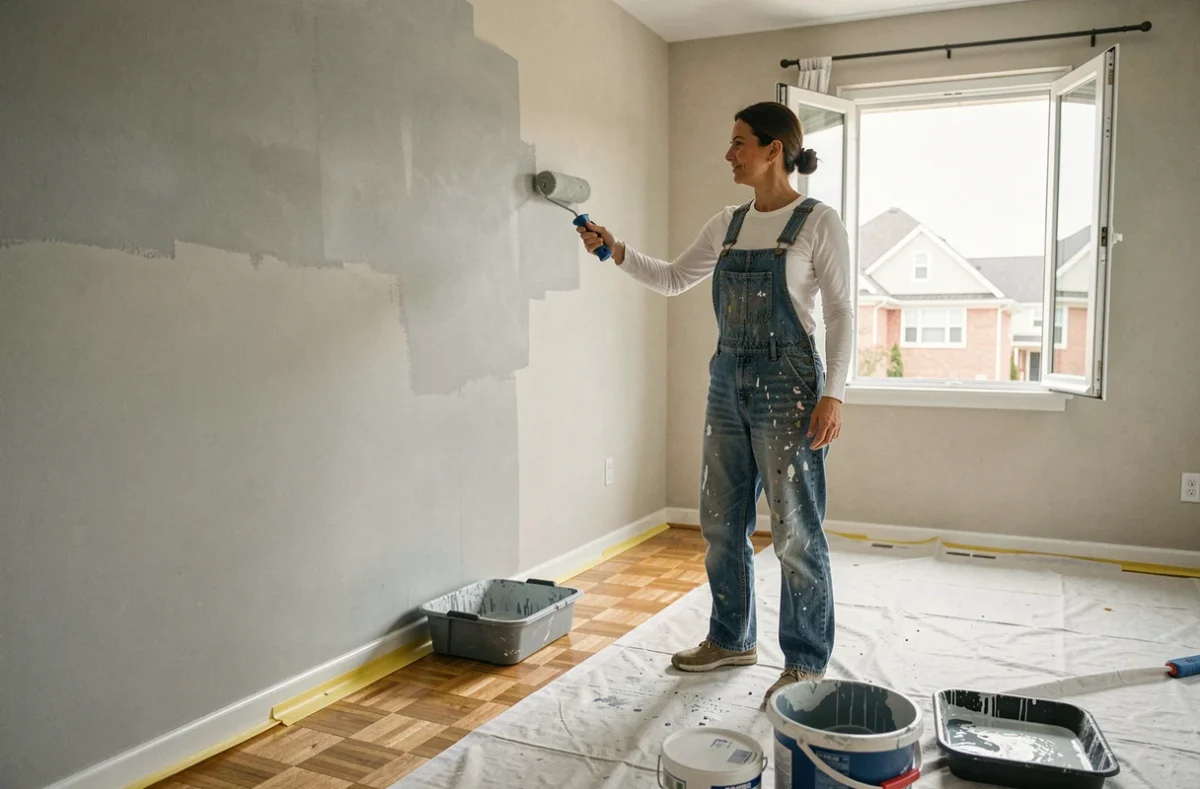
Planning your DIY project: materials, tools and budget
Preparation often takes more time than the work itself, and that’s perfectly normal. Planning a project properly helps avoid repeated trips to the store, duplicate purchases and unpleasant surprises halfway through.
Choosing materials without overspending
Material prices vary considerably depending on where you buy them. General retailers offer a wide selection, but trade suppliers that sell to the public sometimes have lower prices on larger quantities (plasterboard, insulation and structural timber). Comparing at least three suppliers before placing an order is a worthwhile habit.
Prioritising the quality of structural materials (filler, adhesive and screws) rather than cutting corners on these items to spend more on décor is a rule experienced DIYers follow consistently. Cheap adhesive that fails after six months means having to redo the whole job.
Putting together a basic toolbox
Beginners don’t need a fully equipped workshop. This basic kit covers most everyday jobs:
- A tape measure, spirit level and carpenter’s pencil to ensure every measurement and mark is accurate before cutting or fastening anything.
- A cordless drill-driver with a set of bits and drill bits suitable for wood, metal and concrete, replacing several hand tools in one go.
- A sturdy utility knife, a pair of adjustable pliers and a set of flat-head and Phillips screwdrivers—enough for most small assembly and adjustment jobs.
- Personal protective equipment (safety glasses, gloves and a dust mask), often overlooked despite preventing most DIY-related household accidents.
Buying good-quality tools from the outset costs less than replacing budget tools after just a few uses. Mid-range tools from major brands offer good value for occasional use.
Setting a realistic budget
Most budget overruns come from overlooked items: primer before painting, sealant, specialist screws and occasional tool hire (circular saw, belt sander). Listing every item, however minor, and adding a contingency of around 10% to the estimated total helps cover unexpected costs without stress.

Common renovation mistakes and how to avoid them
Certain mistakes crop up on most first-time projects. Spotting them before you start can save time and money.
Skipping surface preparation is the most common pitfall. Painting a wall that hasn’t been sanded or dusted produces a finish that starts peeling within weeks. Laying flooring over a damp screed can cause rising damp and the flooring to come loose. Every surface has its own requirements, and meeting them is essential for a lasting result.
Another common mistake is buying materials before taking final measurements. The walls in a home are almost never perfectly square. Measure the same wall in three places (top, middle and bottom), then use the least favourable measurement to avoid impossible cuts and trips back to the store.
Underestimating the schedule can also lead to projects being abandoned. Allow plenty of time, especially if you’re working at weekends, to avoid frustration and rushed, poor-quality finishing.
Interior design: balancing décor trends with practical constraints
Decorating and improving a space involves more than choosing colours. Every change has technical implications that are best assessed before work begins.
Moving a lightweight partition (plasterboard on a metal frame) is within the reach of an intermediate DIYer, provided they first check that there are no services (electrical wiring, plumbing or ventilation) running through it. A metal and live-wire detector, available for a few dozen euros, is all you need to check.
Soundproofing between two rooms requires a specific approach that goes beyond simply adding another layer to a partition. Without mechanical decoupling (anti-vibration mounts and resilient strips), sound travels through the structure. This is often missing from general DIY guides, even though it has a major impact on the actual comfort of an interior space.
For purely decorative projects (painting, wallpapering and wall shelves), the margin for error is small and the cost of putting things right is limited. These are ideal projects for building confidence before moving on to more demanding work. Every completed project gives you a skill you can use again on the next one, and that steady progress is what makes DIY accessible in the long run.